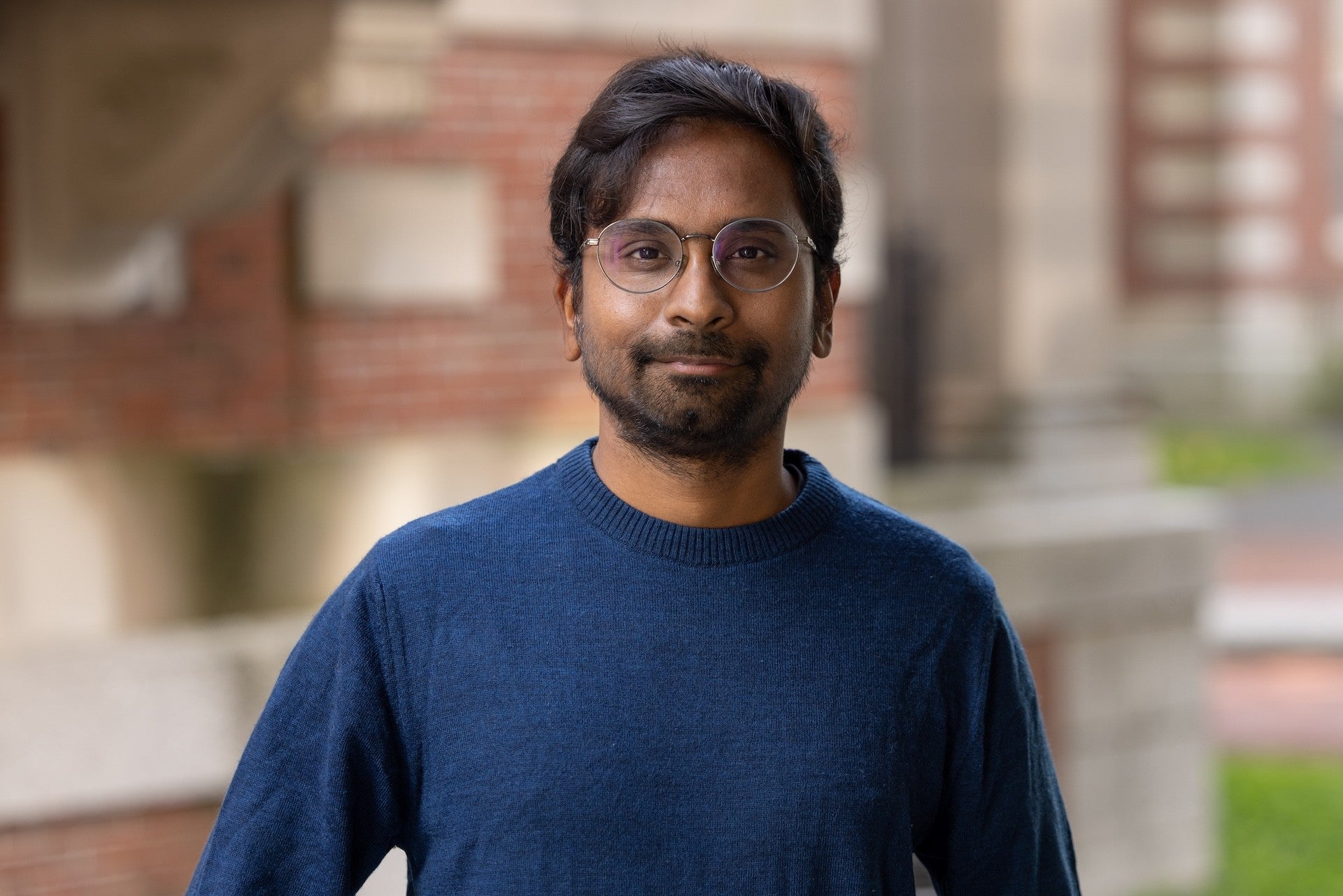
Sagnik Das
S.J.D. Candidate
sadas at sjd.law.harvard.edu
Dissertation
Ordering the World Through Rules: The End of the Cold War and the Making of Modern International Law
The ‘end of history’ moment generated a tremendous amount of international legal activity. Multiple new international courts and tribunals were created in the 1990s, and international legal rules became ever more detailed. The creation of the first international criminal tribunals since Nuremberg made individual criminal responsibility a reality in international law. Atrocity prevention became a central concern and through the jurisprudence of the criminal tribunals, the laws of war were humanized and rechristened as ‘international humanitarian law.’ Within the realm of the global economy, the 1990s were also the decade in which international economic relations were legalized to an unprecedented degree. With the creation of the World Trade Organization and the birth of investor-state arbitration, trade and investment policy were increasingly removed from the sovereignty of states and placed in the hands of expert arbitrators and WTO judges. The international legal architecture began to resemble a domestic liberal constitutional order, with human rights as its moral and legal grundnorm. Global governance—technocratic and elite—became the mantra of the time.
Ordering the World Through Rules tells the story of how this ‘rules-based order’ was created. Foregrounding the ideas of international lawyers in the post-Cold War moment, it shows how constitutionalism became the predominant way of thinking about international ordering. Global governance and international constitutionalism sought to abridge state sovereignty and reduce the role of the state in international affairs through international law and international adjudicative mechanisms. In recounting the making of the rules-based order, the dissertation also traces what was sidelined in the process: structural concerns with global economic inequality, systemic inquiries into the conditions that produce conflict within societies, and pacifist ideals. It also demonstrates that the current backlash against international law and institutions are a product of the foundational choices made in the 1990s, particularly the undoing of the state as the central actor in international relations. Ultimately, the dissertation calls for reinvigorating more ambitious international legal proposals that lost out to the rules-based order, in order to ensure international law’s continuing relevance in the contemporary moment.
Fields of Research and Supervisors
- Human Rights and International Law with Professor Gabriella Blum, Harvard Law School, Principal Faculty Supervisor
- International Legal History with Professor Samuel Moyn, Yale Law School
- International Economic Law with Professor Mark Wu, Harvard Law School
Additional Research Interests
- International Business Transactions
- Contracts
- International Trade
- Alternate Dispute Resolution
- Comparative Law
Education
- Harvard Law School, S.J.D. Candidate August 2021 – Present
- Harvard Law School, LL.M. 2019
- National Law University, Jodhpur, India, B.Sc. LL.B. (Hons.) 2016
Academic Appointments and Fellowships
- Harvard Law School, 2026-2027, Reginald F. Lewis Fellow for Law Teaching
- Harvard Law School, 2026, Lecturer on Law
- Harvard University, Edmond & Lily Safra Center for Ethics, 2025-2026, Graduate Fellow
- Harvard Law School, 2024-2026, LRWA Teaching Fellow
- Harvard College, General Education, 2024, Teaching Fellow
- Harvard College, History Department, 2022, Teaching Fellow
- Harvard Law School, 2019, Summer Academic Fellowship
- Jindal Global Law School, 2020-2021, Assistant Professor
Representative Publications
- Sagnik Das, The Economic Constitution and the (Un)Making of International Law, 136 Yale L. J. (forthcoming; 2027).
- Sagnik Das, The Humanitarian Lawyers, 135 Yale L. J. 1619 (2026).
- Sagnik Das & Ashima Sharma, International Law in India, in Oxford Bibliographies in International Law (2025).
- Sagnik Das, The Doctrinal Decay of Jus Ad Bellum, 2 NLUD J. L. Stud. 89 (2020).
- Sagnik Das and Aarushi Nargas, Mapping the Jadhav Dispute at the World Court: Evaluating India and Pakistan’s Arguments, 48(1) Cal. W. Int’l. L. J. 35 (2017).
Additional Information
- Languages: English (fluent), Hindi (fluent), Bengali (native), French (basic)
Last Updated: July 14, 2026