Book Talk: Adjudicating over Anarchy, by Prof. Geraldo Vidigal
April 16, 2026
12:20 pm - 1:15 pm
WCC 3008
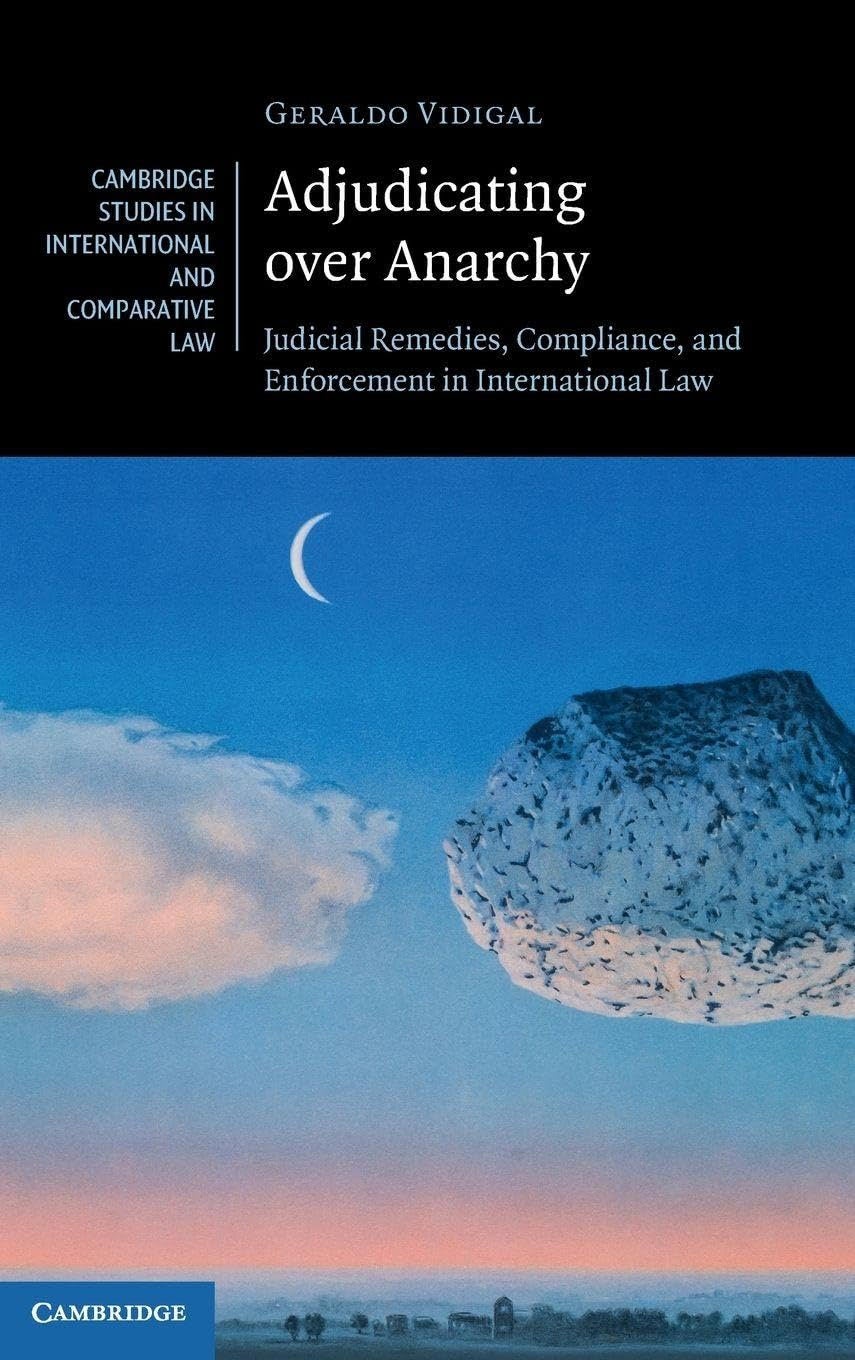
Without the ability to mobilize coercive measures, international adjudicators must rely on their authority to influence real-world outcomes. This paper considers the origin and conceivable uses of the authority of international adjudicators. International courts’ influence relies on their ability to mobilize, through mere authoritative communications, the different internal and external forces that shape state behavior, influencing the views of individuals within states and shaping mutual expectations of cooperative and sanction-worthy behavior. For this, international courts have at their disposal a variety of communicative instruments: their judicial remedies. Though all judicial remedies are, at their core, modalities of interpretation and application of norms, their varied focuses allow adjudicators to calibrate the exercise of their authority. The paper establishes a fourfold typology of international judicial remedies – Mere Adjudication, Declaration of Breach, Consequential Duties, and Permissible Responses – each targeting a specific element of the international normative framework. Through different remedies, adjudicators interpret the normative framework, establish violations, and determine conduct required to restore lawful relations. The fourth category of remedies, often left untapped, encompasses judicial determinations of permissible responses to breach: what measures other actors may take to respond to violations, compelling wrongdoers to comply with their obligations and provide redress for injury. If fully explored, this fourth category might reshape the prevailing understanding of the relationship between international adjudication and coercive enforcement.
Building on these themes, Prof. Geraldo Vidigal will join us for a conversation marking the presentation of his new book, Adjudicating over Anarchy: Judicial Remedies, Compliance, and Enforcement in International Law (Cambridge University Press, 2026). The event is organized by the Harvard International Law Journal (HILJ). Lunch will be provided. Please RSVP
About the author:
Prof. Geraldo Vidigal is Associate Professor at the University of Amsterdam, where he coordinates the LL.M. in International Trade and Investment Law. He is Editor-in-Chief of Legal Issues of Economic Integration, sits on the Editorial Boards of the Journal of International Economic Law and the Latin American and Caribbean Journal of International Law, and is a member of the Executive Council of the Society of International Economic Law. He holds a PhD in Law (University of Cambridge), a Master’s in International Law and International Organizations (Sorbonne – Paris 1), and a Bachelor’s in Law (University of São Paulo). He has been a Dispute Settlement Lawyer at the World Trade Organization, a Senior Research Fellow at the Max Planck Institute in Luxembourg, and a Jean Monnet Fellow at the European University Institute.
If you have any questions, please contact HILJ’s Outreach Chair, Juan Jorge <jjorge@llm26.law.harvard.edu> and the HILJ <hls.ilj.67@gmail.com>.