Beyond the Headlines: AI and Historical Newspapers
January 26, 2026
2:00 pm - 3:00 pm
This event has passed
Zoom
Beyond the Headlines: AI and Historical Newspapers
Online event: 1/26/26 2-3PM EST
Historical newspapers hold stories that shaped our communities, but the sheer volume of their pages has long limited what we could discover within them. What changes when we can digitize and then analyze millions of pages at once? This event, co-hosted by BPL Digital and the Leventhal Map & Education Center, explores how computational text analysis is transforming historical newspaper research.
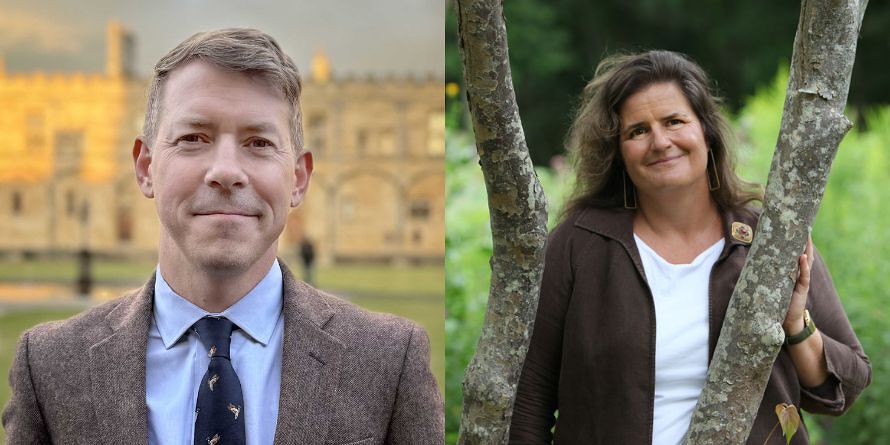
Join Molly Hardy from the Library Innovation Lab and Greg Leppert, Executive Director of Harvard’s Institutional Data Initiative, as they examine the formation of historical newspaper collections and how artificial intelligence contributes to efforts to digitize and make accessible these collections. From newspaper collecting that began in the wake of the American Revolution to training datasets to reveal large-scale patterns, they’ll examine what becomes possible when computational methods meet cultural heritage — and what responsibilities come with these new capabilities.
Dr. Molly Hardy currently serves as the Project Lead for the Public Data Project at Harvard Law School’s Library Innovation Lab. She began her work in special collections at the Harry Ransom Center, while completing her dissertation on eighteenth-century copyright law. Her writing, which has been both public facing and scholarly, has appeared in professional blogs, exhibition catalogs, newspaper articles, and academic journals, and has centered on the transfer of early American archives into online environments, as well as the digital aggregation of historical newspapers and large sets of public data. Her most recent article, “The Unfree Press in the Revolutionary Age, or How to Read an Eighteenth-Century Newspaper,” is forthcoming in the Cambridge History of the American Revolution.
Greg Leppert is the Executive Director of the Institutional Data Initiative at Harvard Law School Library, a research initiative that works with libraries, universities, and government agencies to publish their collections as high-quality datasets. He is also the Chief Technologist of the Berkman Klein Center. Previously, Greg built startups in NYC and Austin TX, toured in art-rock bands, and worked in a historic letterpress studio. He is a strong believer that most people want to do good in the world and are simply looking for the right way to go about it.
More about this event: This is the second in a four-part virtual speaker series hosted by Leventhal Map & Education Center and BPL Digital exploring how artificial intelligence intersects with public knowledge, democratic participation, and cultural heritage. From understanding AI’s implications for civic life to examining how computational methods transform research with historical collections, these conversations bring together scholars, technologists, and practitioners working at the intersection of AI, the humanities, and public institutions.
These hour-long talks are designed for a general audience curious about AI’s role in how we access, understand, and use knowledge held in libraries and archives, addressing questions such as: How does AI reshape democratic participation and governance? What becomes possible when we can analyze millions of historical documents at once? How do we ensure AI tools enhance rather than distort our understanding of the past? What new questions can we ask of collections that were previously too large to examine comprehensively?
Each session will explore these questions through a different lens — from AI’s impact on citizenship and politics, to computational analysis of newspapers and maps, to computer vision applications for visual materials — providing a forum to explore the opportunities and responsibilities that come with this technology.
Accessibility Notice: We strive to make our events accessible. To request a disability accommodation and/or language services, contact the department listed in the “Contact Info” pane on the right. Please allow at least two weeks to arrange accommodation.
Programming at the Boston Public Library is funded through private support. To learn more about supporting the Library, please visit the Boston Public Library Fund’s website.