What is the Race & Law Clinic?
The Charles Hamilton Houston Institute for Race & Justice at Harvard Law School is a law school center that seeks to promote racial equality and civil rights for the 21st century. The Institute’s advocacy work is anchored in its Race & Law Clinic, which offers HLS students the opportunity to do hands-on advocacy in a variety of civil rights areas, and in particular, the clinic explores the future of equal protection, racial equality, and anti-discrimination. The aim is to develop, teach, and practice a lawyering and advocacy approach that leverages policy reform, litigation, legislative engagement, and strategic communications and ultimately builds toward a renewed and effective civil rights regime designed for the challenges faced now and in the future.
Clinical work may include strategy development opportunities, federal and state litigation projects, and advocacy and technical assistance. Under the supervision of the Clinic Director, Michelle Leung, the Strategic Litigation and Advocacy Director, Alora Thomas-Lundborg, and the Houston Institute’s Faculty Director, Professor Guy-Uriel Charles, clinic students will work on every aspect of the clinic’s advocacy strategies, the clinic’s advocacy strategies, which may include strategy tasks such as brainstorming and designing campaign strategies, producing pre-litigation and strategy memoranda, and developing briefing materials for strategic partners; advocacy tasks such as amicus briefs, model legislation, and policy advocacy; litigation tasks such as investigation, meeting and retaining clients, drafting complaints and pre-trial briefing and discovery; and technical assistance tasks such as developing relationships with communities and community organizations, providing education, resources, and other support to communities, and attending coalition meetings; all in service of developing innovative and pragmatic approaches for building a durable civil rights regime for the 21st century.
As an interdisciplinary clinic and center, students will also be exposed to emerging theories and methods in law, policy, social science, and community organizing, including how to communicate them to a legal audience and beyond. The work of the clinic is conducted in partnership with law firms, advocacy and community organizations, civil rights organizations, other legal clinics, and more.
How do I apply?
The Race & Law Clinic is offered in the Fall and Spring semesters. You can learn about the required clinical course component, clinical credits, and the clinical application process by reading the course catalog description and exploring the links in this section.
Interested students should apply using this form no later than April 10, 2026. On the form, you’ll upload each of the below documents as a PDF:
- Resume/CV
- Writing Sample
- Write 1-2 paragraphs about why you are interested in this clinic and its work
Sample Schedule
Students may work at the Clinic office space on campus. Each project has at least two students assigned to it. Student teams meet with their clinical instructor every week. Below are some examples of what a week at the Race & Law Clinic might look like.
| Week 1 | Week 2 | Week 3 |
| – Meet with team to prepare for client meeting – Draft agenda for client meeting – Lead client meeting to gather information and define contours of project/case assignment – Debrief with team to determine how to tackle client’s project/case needs – Meet with clinical supervisor to confirm next steps, debrief on client meeting, and discuss plan for week ahead | – Review Supreme Court briefing – Meet with team and clinical supervisor to come up with semester timeline and divvy up research and drafting responsibilities – Conduct legal research and draft section of brief | – Conduct legal research and writing regarding an area of policing and technology – Confer with team about research hurdles and progress – Draft brief or motion regarding the issue – Prepare for meeting with clinic supervisor, including identifying questions regarding the project |
Meet the Instructors
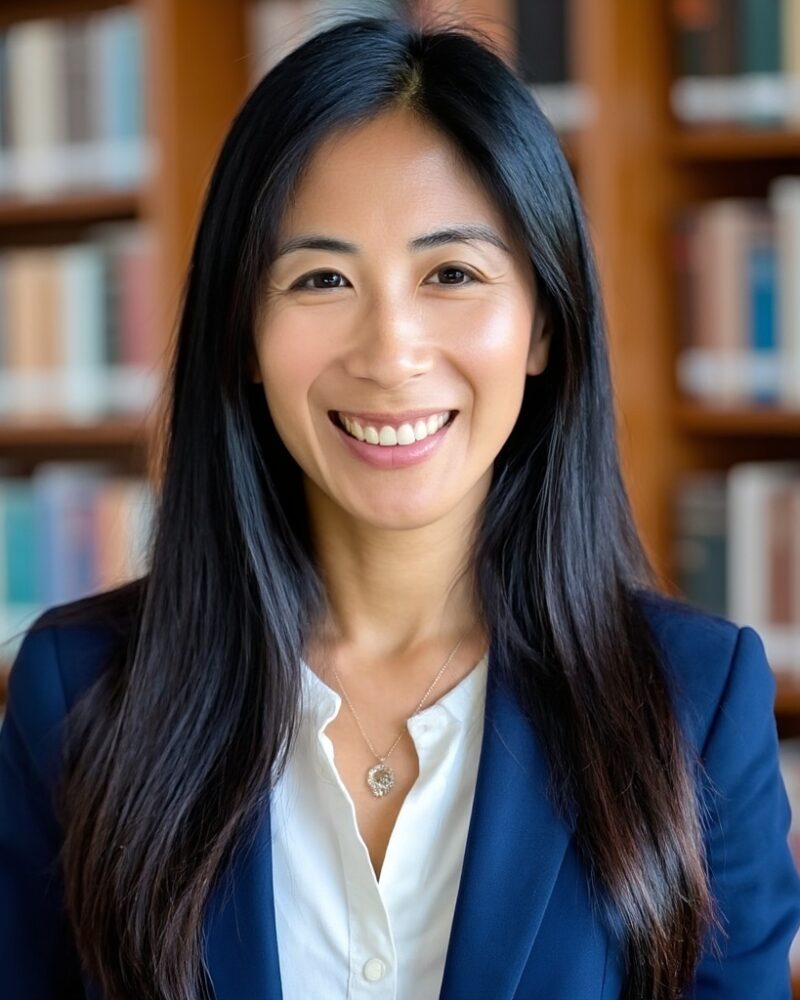
Michelle Leung
Director; Clinical Instructor and Lecturer on Law
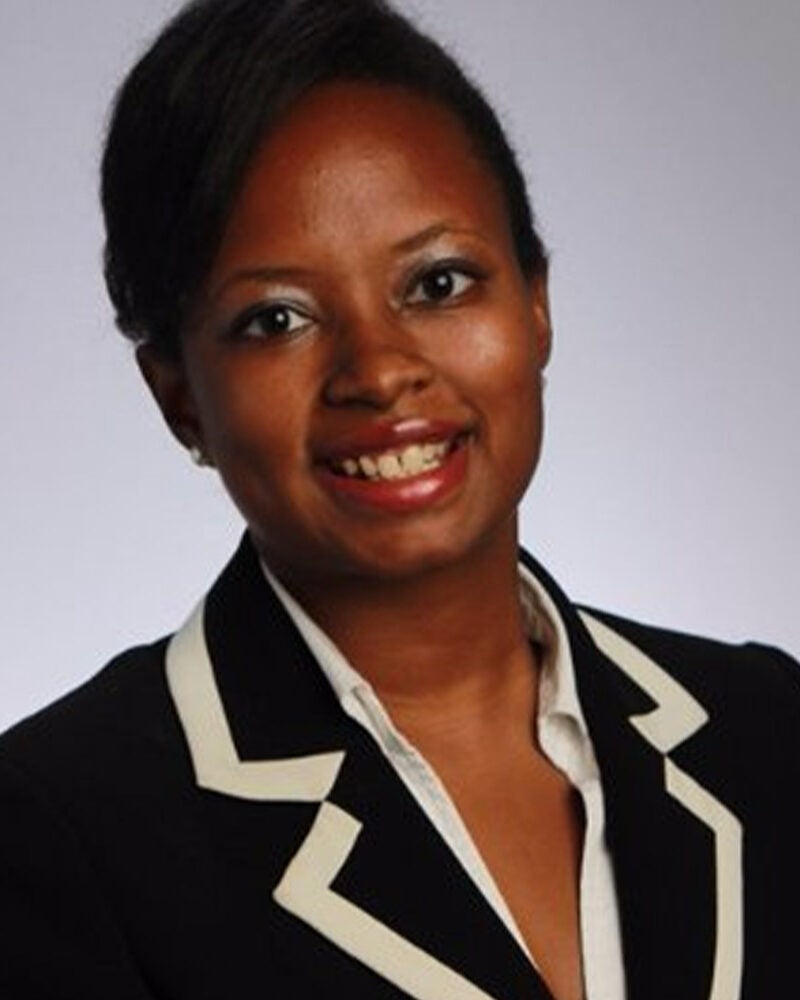
Alora Thomas-Lundborg
Strategic Litigation and Advocacy Director
Alora Thomas-Lundborg is the Strategic Litigation & Advocacy Director at Harvard Law School’s Charles Hamilton Houston Institute for Race & Justice. Before coming to HLS, she was a Senior Staff Attorney in the ACLU Voting Rights Project. At the ACLU, Alora litigated voting rights cases throughout the country, including challenges to voter suppression and gerrymandering. She also co-authored several amicus briefs before the Supreme Court. Prior to joining the ACLU, Alora was a litigator at WilmerHale and Simpson Thacher, and a law clerk to Chief Judge Brodie in the Eastern District of New York. Alora has her B.A. in Political Science from Yale University and a J.D. from Columbia Law School. She is admitted to practice in New York state and several federal courts, including the U.S. Supreme Court.
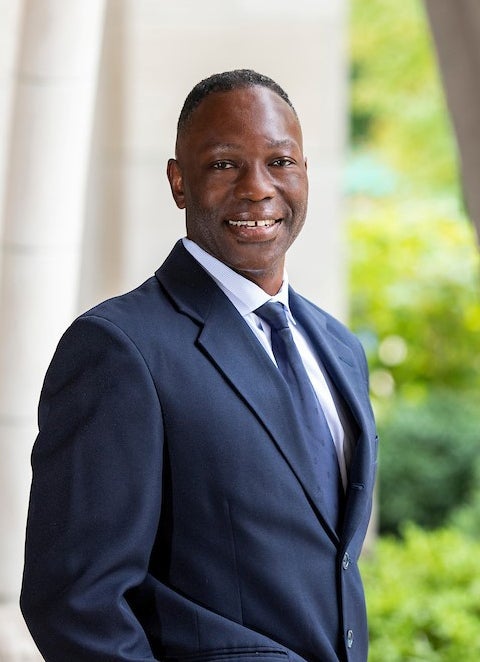
Guy-Uriel Charles
Faculty Director, Charles Hamilton Houston Institute for Race & Justice; Charles Ogletree, Jr. Professor of Law
Guy-Uriel E. Charles is the Charles J. Ogletree Jr. Professor of Law at Harvard Law School where he also directs the Charles Hamilton Institute for Race and Justice. He writes about how law mediates political power and how law addresses racial subordination. He teaches courses on civil procedure; election law; constitutional law; race and law; critical race theory; legislation and statutory interpretation; law, economics, and politics; and law, identity, and politics. He is a member of the American Academy of Arts & Sciences and the American Law Institute. He was appointed by President Joseph Biden to the Presidential Commission on the Supreme Court of the United States. He is currently working on a book, with Luis Fuentes-Rohwer, on the past and future of voting rights, under contract with Cambridge University Press, which argues that the race-based model that underlies the Voting Rights Act has run its course and that the best way to protect against racial discrimination in voting is through a universal, positive rights model of political participation. He is also co-editing, with Aziza Ahmed, a handbook entitled Race, Racism, and the Law, under contract with Edward Elgar Publishing. This book will survey the current state of research on race and the law in the United States and aims to influence the intellectual agenda of the field.
His academic articles have appeared in Constitutional Commentary, The Michigan Law Review, The Michigan Journal of Race and Law, The Georgetown Law Journal, The Journal of Politics, The California Law Review, The North Carolina Law Review, and others. He is co-author of Election Law in The American Political System (with James Gardner) and Racial Justice & Law: Cases And Materials (with Ralph Richard Banks, Kim Forde-Mazrui and Cristina Rodriguez). He is co-editor of The New Black: What Has Changed And What Has Not With Race In America (with Kenneth Mack) and Race, Reform, And Regulation Of The Electoral Process: Recurring Puzzles In American Democracy (with Heather Gerken and Michael Kang).His public writings have appeared in the New York Times, Washington Post, L.A. Time, Time, The Atlantic, Slate, among many venues. He has delivered distinguished lectures at various universities including University of California, Davis Law School, University of Richmond Law School, University of Oregon Law School, William and Mary Law School.
Professor Charles received his JD from the University of Michigan Law School and clerked for The Honorable Damon J. Keith of the United States Court of Appeals for the Sixth Circuit. While at the University of Michigan, he was one of the founders and the first editor-in-chief of the Michigan Journal of Race & Law. From 1995-2000, he was a graduate student in political science at the University of Michigan.
Before teaching at Harvard, he taught at Duke Law School and at the University of Minnesota Law School. He also served as interim co-dean at the University of Minnesota from 2006-2008. He has been a visiting professor at Georgetown, Virginia, and Columbia law schools. He was a past member of the National Research Commission on Elections and Voting and the Century Foundation Working Group on Election Reform. In 2006, he was awarded the distinguished teaching award at the University of Minnesota Law School. In 2016, he was awarded the distinguished teaching award at Duke Law School.